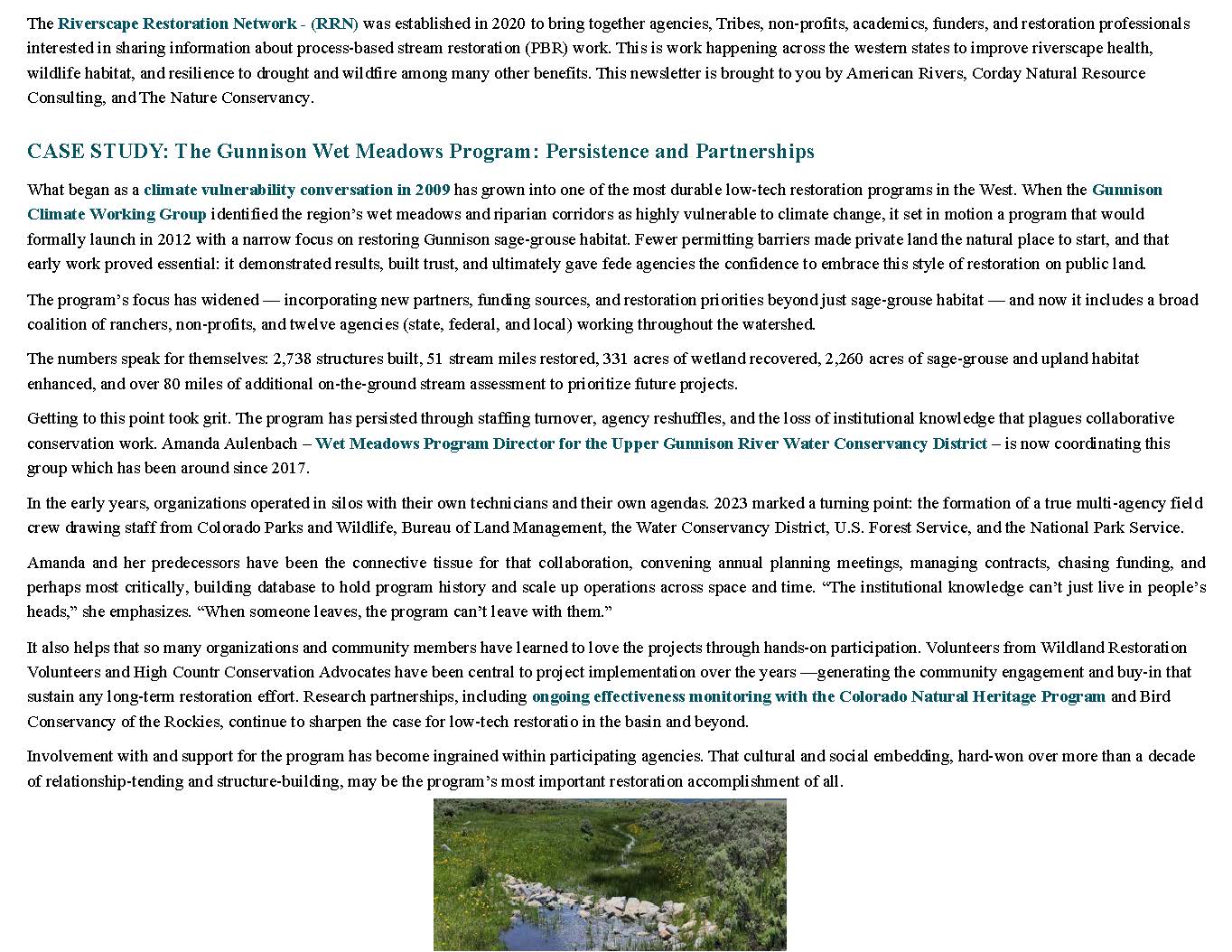
The Upper Gunnison Basin Wet Meadows Program (Program) was established in 2012 by the Gunnison Climate Working Group, a public-private partnership formed to help the Upper Gunnison River Basin adapt to an uncertain future. The Program implements collaborative, watershed-scale restoration of wet meadows and riparian areas with the goal of improving habitat for wildlife, sustaining land-based livelihoods and ecosystem services, and building watershed resilience to drought and other climatic challenges.
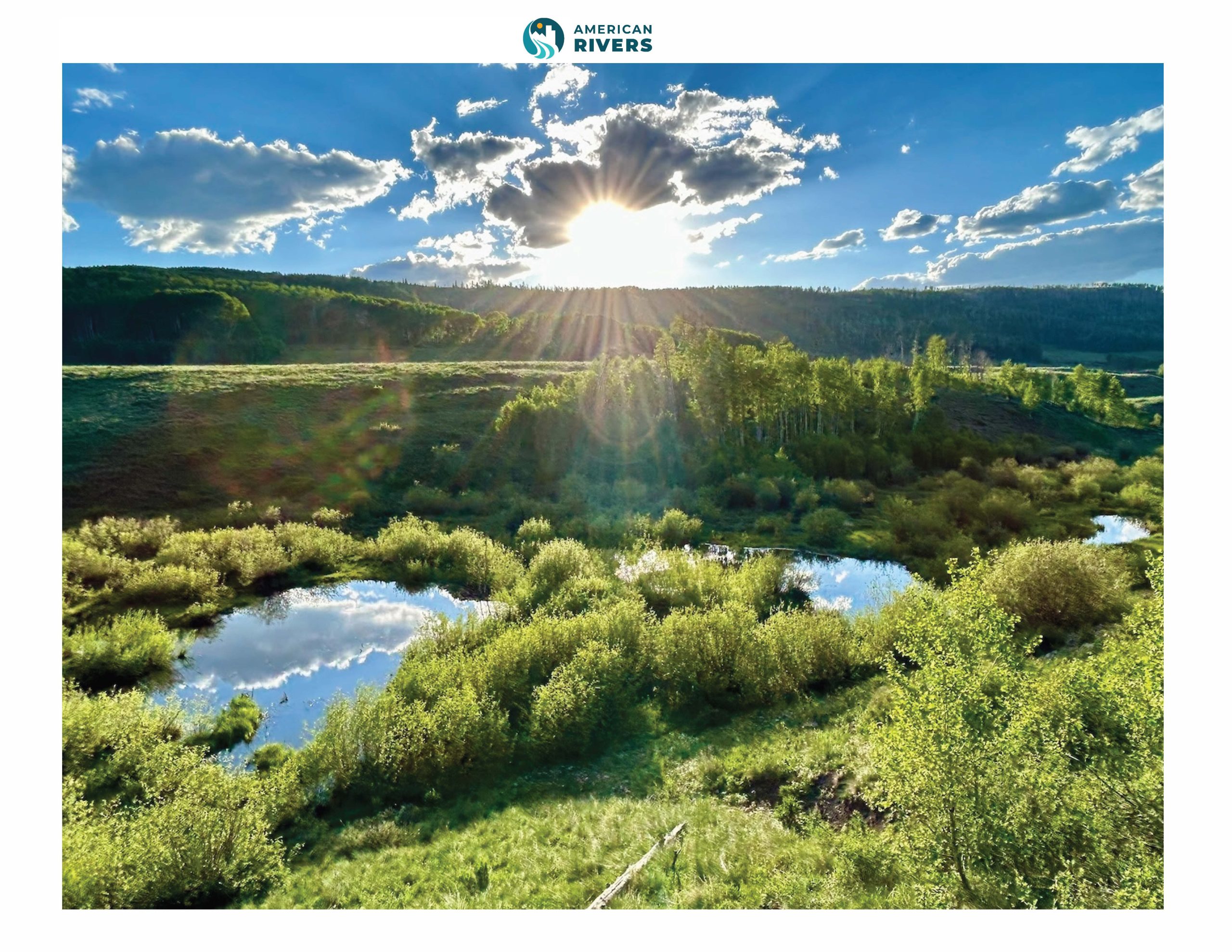
In our basin, wet meadows and riparian areas are a rare and critical resource that provide high-quality habitat and forage for many species, including the federally threatened Gunnison Sage-grouse. The soils in these areas function as “sponges,” absorbing spring runoff and slowly releasing water to maintain higher water tables throughout the summer. Although wet meadows are important for a variety of species and livelihoods, many of them suffer from unnatural erosion, which causes channel incision, lowered water tables, and vegetation loss; in these cases, the soil “sponge” loses that ability to absorb and release water.
To address these challenges, the Program uses Zeedyk-style restoration structures, which are modestly built by hand using rock and/or wood. These structures restore wet meadows by reducing unnatural erosion, capturing soil, slowing runoff, and raising the water table. The result is a more productive and diverse vegetation community, which increases the habitat’s resiliency during drought and provides ecosystem services that people and wildlife depend on.
Since 2012, the Program has constructed more than 2,700 restoration structures, benefiting 50 stream miles and over 2,200 acres of habitat across private, state, and federal lands. The success of these restoration efforts reflects both ecological outcomes and strong collaboration among stakeholders, contributing to basin-wide watershed resilience.